
China Food for Thought #10: Protein Diversification with Chinese Characteristics
Dao Foods views China as the world’s most important protein and food market from both a climate impact and business opportunity perspective. Our China Food for Thought series delves into the rapidly evolving alternative protein sector in China, and the broader market trends within the food industry. We selectively curate and share industry news from China with international audiences that may lack easy access to news and trends in China. Our goal is to provide readers with a ground-up view of valuable industry content from the Dao Foods perspective.
1. Freshippo Brings Plant-Based Meals into Everyday Retail
Freshippo x Supai | Credit: Shiqiaoena
Freshippo, Alibaba Groupʼs tech driven online and offline retail platform, has partnered with plant-based brand Supai to launch a ready to cook meal line called “A Full Plant-Based Table.ˮ The line features cold dishes, main courses, and soups. Highlights include shredded black bean skin with green Sichuan pepper for a refreshing and numbing taste, caramelized rolls made from wheat protein that are soft on the inside and crisp on the outside, pineapple sweet and sour “pork” made from soy protein with a tangy tomato vinegar glaze, and mixed mushroom soup with rich umami notes.
From left to right: Chickpea Milk, Vegan Ready-to-Cook Noodles, Vegan Mini Hot Pot
Beyond collaborations, Freshippo has developed its own whole foods plant-based range, spanning staples, snacks, and plant-based milks. The company’s sustainability strategy promotes local produce to reduce transport emissions, imperfect vegetables priced about 30% lower, and ready-to-cook dishes to cut waste across the agri-food chain. Smaller portion sizes are also marketed for single diners seeking convenience without waste.
Freshippo, one of China ʼs top three supermarket chains with 420 stores nationwide, reported US$10.3 billion in sales in 2024. Its continued push into plant-based categories demonstrates the long-term potential of this growing consumer base.
Resource List:https://mp.weixin.qq.com/s/YgW1P1qvyiK7o04X0nfnEghttps://mp.weixin.qq.com/s/vhYNKByxljq6bCuPET_sRwhttps://mp.weixin.qq.com/s/I2gRVnzkXGmsYF_UhPISrQhttps://www.xiaoyuzhoufm.com/episode/66e411603a5ff0a0ca39300chttps://www.forbes.com/sites/claraludmir/2025/03/20/what-beyond-meat-got- wrong-about-the-future-of-plant-based-eating/Dao Foods Perspective:
According to Forbes, consumer interest has shifted away from alternative meat. However, health awareness remains the key motivator for those exploring plant-based diets. While alternative meat is no longer seen as the singular solution, simpler products made from lentils, beans, and seeds are gaining favor.
This trend also applies in China’s plant-based market, now worth US$18 billion and accounting for one-quarter of the global total, which is still expanding rapidly. Zhongyan Puhua (a Chinese industry information service provider) forecasts a 217% year-on-year increase in plant-based consumption frequency in 2025.
Meituan data shows that consumers aged 25–35 contribute 68% of plant-based dining orders, with post-1995 consumers rising 29% in three years. These diners increasingly reject traditional “mock meat” dishes, preferring original flavor plant-based cuisine centered on mushrooms and root vegetables, which has a 41% repurchase rate compared with 18% for plant-based meat dishes.
2. Starfield Expands Lineup with New Tofu Products
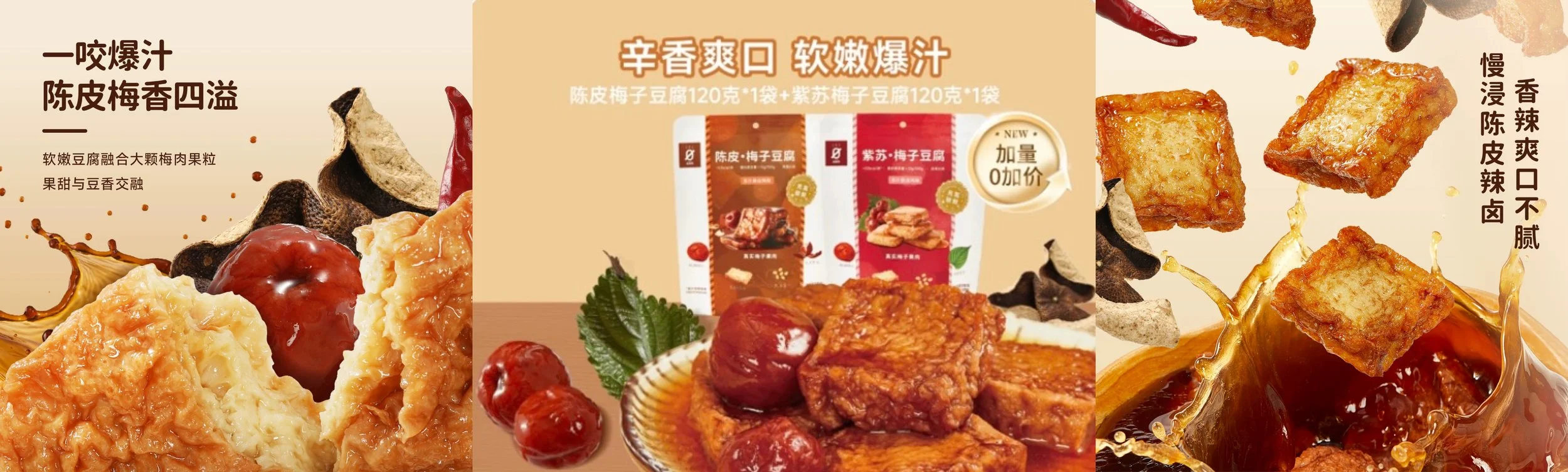
Tangerine Peel & Perilla Leaf Plum Tofu
Starfield, one of China ʼs leading plant-based startups, has introduced Dried Tangerine Peel and Perilla Leaf Plum Tofu snacks, a creative fusion of fruit and tofu designed to bring a fresh twist to traditional soy-based treats. The tofu is first fried and then marinated to achieve a firm exterior, tender interior, and juicy bite. Generous pieces of plum are blended with silky tofu and infused with the aroma of dried tangerine peel or perilla leaf, creating a balanced, sweet and sour flavor profile that redefines the category of tofu snacks.
The tofu snack contains 12.7 grams of protein per 100 grams, offering higher protein and lower fat than conventional soy snacks. In August, Starfield introduced Poki Salad Bars and Veggie Crisps at Oleʼ , a boutique grocery chain with 120 stores nationwide. In September, the company expanded to online channels including Pupu, an online grocery retailer based in South China, and Dingdong, a grocery delivery platform that covers 25 cities.
Fresh Tofu Products: Nut Dried Tofu and Juicy Vegetarian Meat
Starfield also entered 219 RT Mart stores, part of a network of 500 outlets across 207 Chinese cities, to launch its new range of fresh tofu products. Distribution is expected to expand further through JD.com (one of China ʼs top two e commerce platforms), Meituan, and Ele.me (Chinaʼs top two food delivery apps), as Starfield works to capture both offline retail and instant e commerce traffic.
Through these innovative plant-based products, Starfield is doubling down on its strategy to raise awareness of plant-based eating by making it accessible to a broader audience through diversified channels and localized product innovation.
Resource List:https://mp.weixin.qq.com/s/kiDYXr0QOTjo-2b-O82c-whttps://mp.weixin.qq.com/s/kMde4W7RIUMLZgiKp18XUQhttps://mp.weixin.qq.com/s/PJI55awn33237ZNVETEKXAhttps://mp.weixin.qq.com/s/WquiINGHzZIiYO3nkO2krghttps://mp.weixin.qq.com/s/EHegHYCKoAkReSsxNztTsQDao Foods Perspective:
As plant-based meat sales have softened in recent quarters, Starfield, a Dao Foods portfolio company, has expanded into plant-based beverages and snacks, including coconut water, rice milk, and its signature tofu-based products, while continuing to develop its alternative meat line.
China has centuries of experience with plant-based proteins. Starfield’s reinterpretation of these ingredients appeals to younger consumers by blending tradition with modern convenience. This strategy has kept Starfield profitable while most plant-based meat companies face decline.
3. Angel Yeast Sees Yeast Protein as Its Next Growth Driver
Yeast Protein Powder with Five Red Grains
In September, Angel Nutritech, a subsidiary of Angel Yeast, launched Yeast Protein Powder with Five Red Grains, further expanding the companyʼs portfolio of yeast protein products. The new formulation blends goji berries, jujubes, adzuki beans, red rice, and brown sugar, ingredients long valued in traditional Chinese wellness culture for their role in nourishing the body and enhancing natural radiance.
The product features yeast protein derived from food grade brewing yeast, with non protein components removed to achieve over 80 percent purity while preserving the enzymes and structural proteins produced during fermentation. The sugar free and easy to digest formula targets a wide consumer base, including seniors, diabetics, fitness enthusiasts, and sedentary office workers, reflecting growing demand for functional and convenient protein supplementation.
Angel Yeast and Huazhong Agricultural University have jointly published animal studies in Food Research International, a top tier CAS Zone 1 journal, confirming yeast proteinʼs potential to promote calcium absorption and prevent osteoporosis. Research shows that essential amino acids account for about 48 percent of total amino acids in yeast protein, closely aligning with the ideal amino acid profile. The protein is particularly rich in glutamic acid, glutamine, alanine, and branched chain amino acids such as leucine, isoleucine, and valine, nutrients critical for bone health and calcium metabolism.
From left to right: Yeast Protein Meal Replacement, Gummies, and Powder
Holding a 55 percent share of Chinaʼs yeast market and more than 20 percent globally, Angel Yeast has in recent years accelerated research and commercialization of yeast protein. The company has introduced multiple product formats, including protein powders, gummies, and granola, and is positioning yeast protein as its next key product focus.
Resource List:https://mp.weixin.qq.com/s/PATcfG8ocs9vNhzJ5ZltJwhttps://mp.weixin.qq.com/s/DCnfZ3X-SJMZFTUi3FbVIQhttps://mp.weixin.qq.com/s/V-7rP1sHGJ3AnfipRPkkHghttps://mp.weixin.qq.com/s/wGNBuhH03hljUuxT8pI5EQDao Foods Perspective:
Chinaʼs 2024 State Council policy on “The Big Food Conceptˮ urges diversification of calorie and protein sources from plants, animals, and microorganisms. Yeast protein fits directly into this national agenda. Fermentation is already a fully industrialized process, capable of 24-hour continuous production cycles completed in just hours. The process consumes 1/200th of the water and 1/100th of the land required for animal protein, relying primarily on molasses or hydrolyzed sugars as a carbon source.
As the worldʼs largest importer of whey protein, China accounts for 20% of global imports and remains heavily dependent on soybeans. Yeast protein offers a strategic domestic substitute with significant growth potential. The global yeast protein market is projected to reach US$2.45 billion by 2030, with a compound annual growth rate of 9% from 2024 to 2030.
4. Beijing and Shanghai Hospitals Open Plant-Based Clinics
Plant-based Outpatient Clinic, Department of Clinical Nutrition, Beijing Zhongguancun Hospital
Chinaʼs plant-based nutrition clinic sector is expanding rapidly. In May 2025, Beijing Zhongguancun Hospital opened the countryʼs first plant-based outpatient clinic, followed by Shanghai Jiao Tong Universityʼs Xinhua Hospital, with a third set to open in Beijing this November.
The initiative addresses a long-standing gap in healthcare services. While herbivores and omnivores share common diagnostic tests such as blood glucose, CT scans, and ECGs, plant-based-specific health assessments have been scarce. Many vegetarians and vegans are unsure which tests to take, while physicians often lack guidance on how to interpret or recommend them.
The clinics are designed to meet four criteria: physicians must understand and respect plant-based diets; they must have formal training in plant-based nutrition; clinics must offer specialized tests tailored to vegetarians and vegans; and services must be covered by public medical insurance.
These institutions aim to raise awareness within China ʼs medical community and ensure vegetarians and vegans receive credible, evidence-based health advice. Experts leading the initiative come from China ʼs top universities, hospitals, and research institutions, with deep expertise in nutrition, oncology, chronic disease management, and plant-based diet science.
Resource List:https://mp.weixin.qq.com/s/WJfAe3NUPFwNPe6L7J2SvQhttps://mp.weixin.qq.com/s/neczdELIENBfapG6Mxc3fQpoc_token=HOZ35WijjvRSmArs3KOM4_xa_zIfV-mc1EbK7cLehttps://mp.weixin.qq.com/s/I2gRVnzkXGmsYF_UhPISrQDao Foods Perspective:
Chinaʼs vegetarian and vegan population is estimated at around 50 million, with most vegans concentrated in first-tier and new first-tier cities. According to CBNDataʼs 2025 China Plant-Based Consumption Trend Report, only 12% of vegetarians and vegans follow the diet for religious reasons, while 73% cite health motivations such as lowering cholesterol, and 58% do so for environmental concerns, as livestock accounts for 14.5% of global carbon emissions.
This attitudinal shift has fueled the rise of flexitarianism, where consumers choose vegetarian meals one or two days a week. According to CBNData, Flexitarians now represent 42% of the population, forming the largest growth segment in Chinaʼs evolving plant-based market. Plant-based clinics are emerging to support both committed and aspiring vegetarians and vegans by ensuring proper nutritional balance and reducing fears of nutrient deficiency and other diseases.
5. Yunnanʼs Mushroom Craze Becomes a Defining 2025 Summer Trend
Every summer marks the wild mushroom season in Yunnan, which produces 91 percent of China ʼs edible fungi species and 45 percent of the worldʼs total. The provinceʼs biodiversity yields a rich variety of mushrooms, including matsutake, porcini, and chanterelle. In recent years, mushrooms have moved beyond traditional dishes to become a flavor inspiration for a wide range of consumer packaged goods. Yunnan mushroom flavors have turned into a national cultural phenomenon, captivating consumers across China.
Blue Staining Mushroom Yogurt
Among them, the vividly colored blue staining mushroom (见⼿⻘) has become the most popular. Yili, one of China ʼs dairy giants, released a limited edition blue staining mushroom yogurt of 5,000 units, which sold out in four days. Originally priced at ¥2.49 per bottle (aboutUS$0.34), it now resells for over ¥10 (about US$1.37) on secondary markets. A blue staining mushroom craft beer from a local Yunnan brewer went viral online, drawing 33 million video views, with one clip alone generating 300,000 shares and tens of thousands of comments. The first batch of 100,000 bottles sold out in less than ten days. Another local Yunnan brand launched a blue staining mushroom cola, originally priced at ¥9.9 (about US$1.36) per bottle. It sold more than 7,000 bottles in five days and now resells for over ¥19.9 (about US$2.72) per bottle on secondary markets.
From left to right: Sam’s Club x Weilong, Heytea, Chacha
Beyond the blue staining mushroom craze, brands are finding creative ways to incorporate Yunnanʼs rich mushroom culture into their products. Heytea, a leading Chinese tea beverage chain, launched a porcini ice cream in collaboration with Chinese celebrity chef Zian Li. The ice cream blends Puer tea with porcini, matsutake soy sauce, and Spanish sweet pepper powder. Samʼs Club and Chinese snack food company Weilong introduced a Porcini Konjac Snack made with 20 percent Yunnan porcini mushrooms. Chacha, another major Chinese snack brand, launched a Local Flavor Series that includes Yunnan Wild Mushroom, drawing on regional flavor traditions to reinvent familiar snacks.
Resource List:https://mp.weixin.qq.com/s/EXizjd-0YzgrSJLUlj8bdghttps://mp.weixin.qq.com/s/2Rcjpr6k7banEOD2XMnasghttps://mp.weixin.qq.com/s/LI8KnxSS7KsO4Ee3I26brghttps://mp.weixin.qq.com/s/RPZSI1ZGnRzO9orZw2MBnADao Foods Perspective:
In Chinaʼs fast moving food and beverage sector, Yunnan mushrooms have emerged as one of 2025 ʼs biggest food and marketing trends, a “social currencyˮ product that is novel, photogenic, and instantly shareable on social media. The wave of mushroom inspired releases shows how brands are turning local flavor identity into a strategy for differentiation in an increasingly homogenized marketplace. Drawing from regional food heritage is becoming a core tactic for breaking through sameness and driving viral success, especially among China ʼs younger consumers.
