
How Zhonggu Mycelium Is Bringing Alternative Protein to China’s Most Common Staple Food
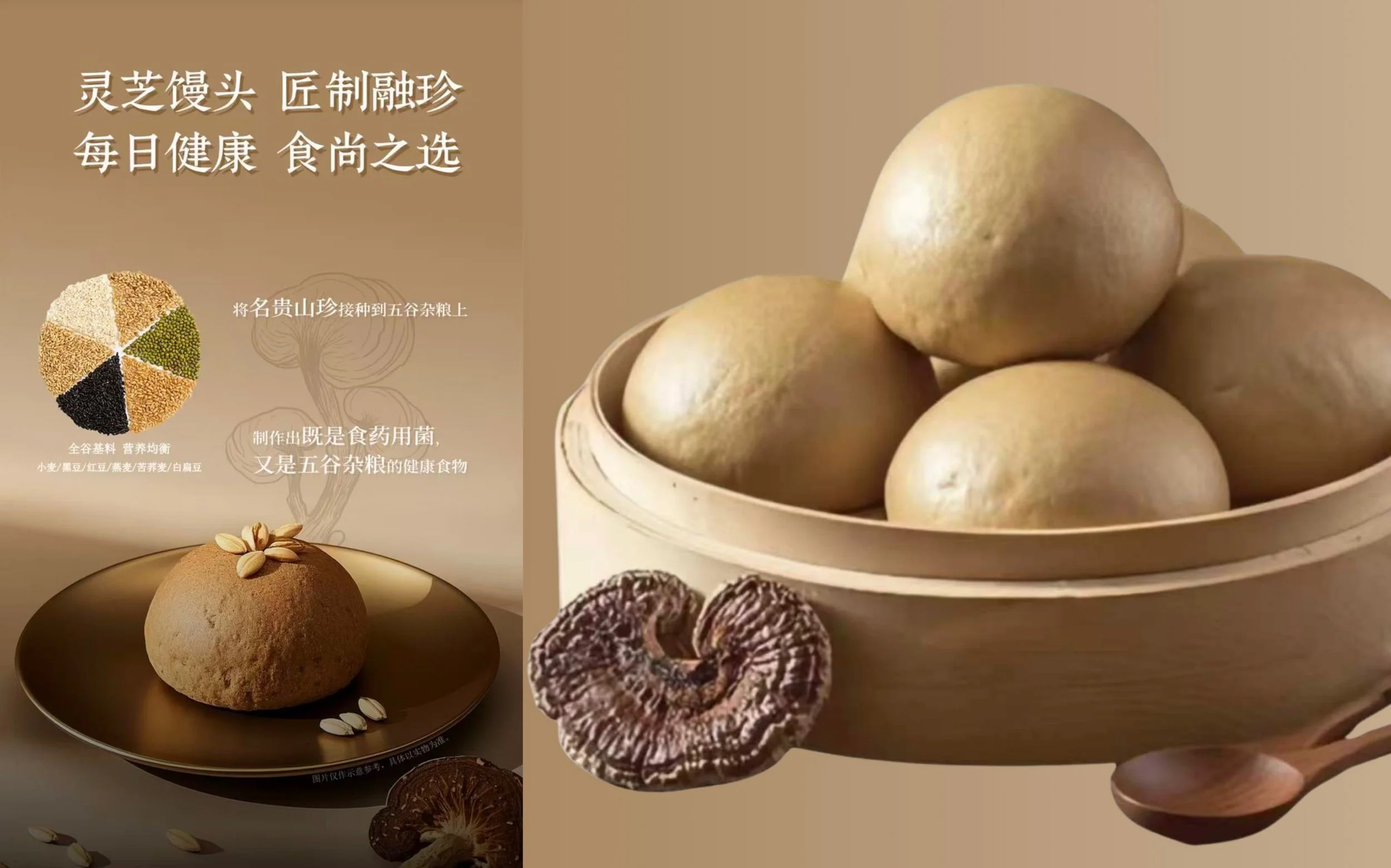
In April, Zhonggu mycelium, a Dao Foods portfolio company, partnered with a well-established regional food brand in Henan Province to launch reishi steamed buns under the brand Jiaiwuwu (即爱吾吾). The product is sold at around RMB 5 per unit, compared to approximately RMB 2 for conventional buns, representing a premium of 2 to 2.5 times. In a category where consumers are typically highly price-sensitive, this level of premium is difficult to achieve.
In China, conventional steamed buns (mantou, 馒头) are typically made from refined white flour, with low nutritional value and a high glycemic index. The introduction of mycelium-infused formulations shifts this dynamic toward a lower glycemic index, higher protein, and higher dietary fiber, aligning closely with the growing demand for healthier everyday foods. Reishi (lingzhi, 灵芝) is recognized across China as the “mushroom of immortality,” revered for over 2,000 years to promote longevity, and traditionally used in Traditional Chinese Medicine (TCM) to enhance immunity, reduce stress, and support heart and liver health.
Zhonggu Mycelium does not supply directly to retail stores. Instead, it supplies mycelium powder to COFCO International, China’s largest food and agriculture company, which incorporates the ingredient into flour production. The enriched flour is then distributed to downstream operators such as Jiaiwuwu. At the store level, the production process remains unchanged, following the same steps of mixing, shaping, and steaming. This model, which replaces ingredients without changing existing processes, significantly lowers adoption barriers and enables scalable replication across traditional food systems.
To support further growth, Zhonggu mycelium is expanding its production capabilities with a new facility, representing a total planned investment of RMB 150 million (≈ 20.8 million USD, including both the facility and other support from the local government). The facility will focus on producing mycelium powder, mycelium-based raw materials, and consumer products such as protein bars and functional coffee. Once fully operational, it is expected to generate annual output value exceeding RMB 100 million (≈ USD 14 million).
This case represents more than a single product success. It illustrates a scalable pathway for alternative proteins to enter high-frequency, everyday consumption scenarios by embedding functional ingredients into existing supply chains, aligning with cultural concepts such as food as medicine, and delivering tangible value to consumers. Zhonggu mycelium is demonstrating how mycelium protein can move from innovation to adoption, and from niche to scale within the broader food system.
