
Dao Foods Updates: 2025 Year in Review
As we step into the first days of the Year of the Fire Horse, all of us at Dao Foods extend our warmest wishes for the year ahead. In the Chinese calendar, 2026 marks the Fire Horse, a cycle that occurs once every 60 years and symbolizes strength, momentum, and conviction.
The symbolism is timely. For many sectors, 2025 was not a year of rapid expansion. Capital grew more selective, growth moderated, and uncertainty lingered. Yet amid the volatility, the foundations of long term value and the outlines of structural change became clearer.
In alternative proteins, the industry has moved beyond its initial expansion phase and into deeper technological terrain. Progress in biomanufacturing and enabling platforms is repositioning next generation proteins from niche alternatives to strategic pillars of food security and the broader bioeconomy. Periods of disciplined innovation during cyclical slowdowns often lay the groundwork for the next phase of growth.
Below is Dao Foods’ 2025 update.
Yu Garden, Shanghai Photo credit: wanpingnanlu
Venture Capital rebounded in 2025 to almost 2021 peak levels. However, 60% of global and 70% of US venture capital flowed almost exclusively to AI companies through massive mega-rounds (US $100 million or more). Quite different from back in 2021, when startup dollars were widely distributed across sectors and from early-stage to late-stage companies. Strip out AI, and the recovery all but disappears. Traditional small-to-medium VC deals have begun to quietly disappear.
Ag-tech funding reached its lowest level in several years in 2025, down in both deal counts and dollar sizes. Investors continued their flight to quality, moving towards late-stage ag-tech companies, as many shifted their investment focus towards precision ag and robotics, boosted by interest in AI. Early-stage ag-tech companies are struggling to raise capital, with many either bootstrapping or relying on public funding before seeking venture capital.
There appears to be growing awareness and increasing policy movement in areas related to Sustainable Food in China. Below are just a few examples of National and local policy initiatives.
China Food and Nutrition Development Outline (2025 to 2030) Highlights Protein Supply Optimization
In February, the Ministry of Agriculture and Rural Affairs, the National Health Commission, and the Ministry of Industry and Information Technology jointly released the China Food and Nutrition Development Outline (2025 to 2030). The policy calls for further optimization of China’s food supply structure and improvements in population level nutritional health. The Outline places particular emphasis on expanding the supply of high quality protein, identifying soybeans as a strategically important protein source. It encourages nutritional upgrades of traditional soy based foods, the development of blended soy milk and alternative protein products, and broader inclusion of soy products and soy milk in public nutrition programs such as schools, elderly care institutions, and child welfare facilities.
Cultivated Meat and Plant-based Foods Advance Through National Standardization
In February, the national recommended standard GB/T 19480 (2025), Meat and Meat Products Terminology, formally incorporated the term “cultivated meat” into China’s official meat industry terminology for the first time. The standard defines commonly used terms across meat and meat product processing and applies to processing, inspection, trade, and industry administration.
In December, the China Chamber of Commerce of Foodstuffs and Native Produce announced the launch of the China Plant-based Food Group Standard. This represents China’s first national level group standard dedicated to plant-based foods, aimed at improving industry consistency and addressing challenges such as uneven product quality, unclear marketing terminology, and limited consumer understanding. Earlier, in May 2025, CFNA established a Plant-based Food Subcommittee to advance plant-based protein applications and strengthen engagement with regulators to support policy development.
China MIIT Accelerates Biotechnology Adoption in Food Manufacturing
MIIT Press Conference
In July, China’s Ministry of Industry and Information Technology (MIIT) stated at a press briefing that it will continue to promote the broader application and faster integration of biotechnology, particularly synthetic biology, across the food industry. MIIT highlighted its support for enterprises in optimizing fermentation process systems and accelerating the development and deployment of alternative protein technologies, including microbial protein, through expanded use of biotechnology in food manufacturing.
Shanghai Launches Food Technology Action Plan Supporting Alternative Protein and Synthetic Biology
In December, the Shanghai Municipal Government released the Shanghai Action Plan for Accelerating Food Technology Innovation and Empowering Industrial Development (2026 to 2030). The plan formally positions food technology within Shanghai’s broader biomanufacturing and digital industry framework and provides coordinated support for the development of novel foods. Priority areas include alternative proteins, cultivated meat, cultivated dairy, synthetic biology based foods, algae based foods, and 3D printed foods. By 2030, Shanghai aims to establish itself as a globally influential hub for food technology innovation and industrial development, supporting a safer, healthier, more convenient, and more sustainable food system.
Throughout 2025, Dao Foods closely tracked China’s alternative protein sector through our China Food for Thought newsletter and China AltProtein News on LinkedIn. Here are a few key developments from the year that caught our attention.
Angel Yeast Launches 11,000 Ton Yeast Protein Facility
Angel Yeast’s AnPro Yeast Protein Powder
In November, Angel Yeast commenced operations at its fully automated yeast protein production line in the Baiyang Biotech Park in Yichang, Hubei Province, with annual capacity reaching 11,000 tons.
Yeast protein is extracted from natural yeast strains cultivated through continuous fermentation. According to the company, a single 1,000 cubic meter fermenter operating for three days can generate protein equivalent to the output from 300,000 mu of soybeans, a crop that requires at least four months from planting to harvest.
Angel Yeast, the world’s second largest yeast manufacturer by production scale, is leveraging its fermentation technology platform to expand into higher value products including yeast protein and plant peptones, positioning alternative proteins as a new growth engine.
Fusarium venenatum Approved as Novel Food Ingredient
Fushine’s FuNext Fusarium Venenatum Protein
In November, China’s National Health Commission approved Fusarium venenatum protein as a new food ingredient following a formal safety review, clearing a key regulatory hurdle for commercialization.
Fusarium venenatum protein is produced through fermentation of a filamentous fungus and belongs to the category of fungal derived proteins. The ingredient contains all 18 amino acids required by the human body and is rich in dietary fiber and minerals. Its functional properties and nutritional profile position it for broad application across plant based meat and dairy alternatives.
Producer Fushine operates at 1,200 tons of annual capacity and is advancing a 200,000 ton expansion, underscoring confidence in fermentation driven protein demand.
Joes Future Food Completes 2,000 Liter Cultivated Meat Pilot Plant
Joes Future Food
In December, Joes Future completed China’s largest cultivated meat pilot facility, marking a significant scale up milestone for the sector. The plant enables trial production of cultivated pork in a 2,000 liter bioreactor, with designed annual capacity of 10 to 50 tons, moving the company beyond lab scale development toward pre commercial manufacturing.
Working in collaboration with Nanjing Agricultural University, Yangzhou University, and Anhui Agricultural University, the company has developed six products including cultivated pork belly and pork chops.
Joes Future has also incorporated 3D printing technology to produce hybrid products that combine mycelium protein with cultivated pork. Its “honeycomb meat” structure is engineered to improve texture and mouthfeel, highlighting the growing technical flexibility of cultivated meat applications.
SDIC Expands Into Alternative Protein Through Strategic Partnership
SDIC × Dongsheng Equity Transfer Signing Ceremony
In December, SDIC Group, is a state owned investment group, signed an equity cooperation agreement with Dongsheng Biotech in Taixing, Jiangsu Province, launching an industrialization project focused on alternative.
Biomanufacturing has been identified by SDIC as a priority future industry. The partnership aims to combine research capabilities with industrial scale production to accelerate commercialization of mycelium protein and other alternative protein technologies.
Dongsheng Biotech specializes in food enzyme development and is one of China’s leading producers of transglutaminase enzyme. The company reports exports to Europe, North America, and Southeast Asia, alongside a strong domestic market position.
Zhong Gu Mycelium
Zhong Gu Mycelium recently signed an agreement with the Xinjin District government in Chengdu. Under the agreement, the government will provide support valued at approximately RMB 150 million (~US $21 million), including the construction of a mycelium protein production facility in Chengdu. The 4,000 square meter plant marks the company’s first expansion into Southwest China following establishment of its Inner Mongolia headquarters. Once fully operational, the facility is expected to generate annual revenue exceeding RMB 100 million (~US $14 million).
PlantNow
As China’s offline distribution channels underwent rapid transformation, the offline market faced significant consolidation pressures. In response, PlantNow launched new superfood juice line specifically optimized for online channels. Notably, Its Turmeric Lemon Drink ranked first on Douyin (Chinese TikTok) within three months of launch. The company secured follow on funding from existing investor Better Bite and a strategic investment from Nice Group, a major Chinese consumer goods conglomerate. In 2026, PlantNow will deepen collaboration with Nice Group, leveraging botanical resources in Lishui to expand product development and industrial integration.
Plant-based Cakes from Zero Limit’s Yunke Brand
Zero Limit achieved 21 percent year on year growth in 2025, driven by expansion into plant-based cakes, a new core category that accounted for 42.5 percent of total sales. The company sold 20,000 cake units during the year, establishing the segment as a strategic growth driver and diversifying its revenue base.
Liven is advancing precision fermentation derived collagen ingredients designed for targeted joint health applications. In 2025, the company moved its lead bioactive collagen polypeptide from concept to validated use cases, engaging more than 100 food and supplement brands and securing five letters of intent. Liven is building pilot scale manufacturing and progressing along the U.S. GRAS pathway. Early in vitro data supports the biological mechanism behind its low dose approach, reducing technical risk as it prepares for commercialization.
Asia 100 Sustainable Agri-Food Development Forum
Hong Kong | August 27, 2025
Asia 100 Sustainable Agri-Food Development Forum
Tao Zhang, Co Founder of Dao Foods, spoke at the Asia 100 Sustainable Agri-Food Development Forum on financing innovation in the agri-food sector. The session convened leaders from finance and venture capital. Zhang outlined Dao Foods’ impact driven investment approach, emphasizing measurable outcomes alongside financial returns and differentiating it from traditional finance first venture models.
Future Growth and Breakthrough Pathways for China’s Alternative Protein: Roundtable Discussion at China Vegan Summit
Shanghai | September 25, 2025
China Vegan Summit
At the China Vegan Summit 2025, Dao Foods and portfolio company Zhong Gu Mycelium participated in a roundtable discussion focused on future growth drivers and breakthrough pathways for China’s alternative protein industry. The session brought together investors and entrepreneurs to examine sector trends from investment, research, and commercialization perspectives.
Biomanufacturing × Future Agri-Food Industry Salon and the 12th Next-Gen Good Food Bootcamp
Wuhan | October 31, 2025
Biomanufacturing × Future Agri-Food Industry Salon and the 12th Next-Gen Good Food Bootcamp
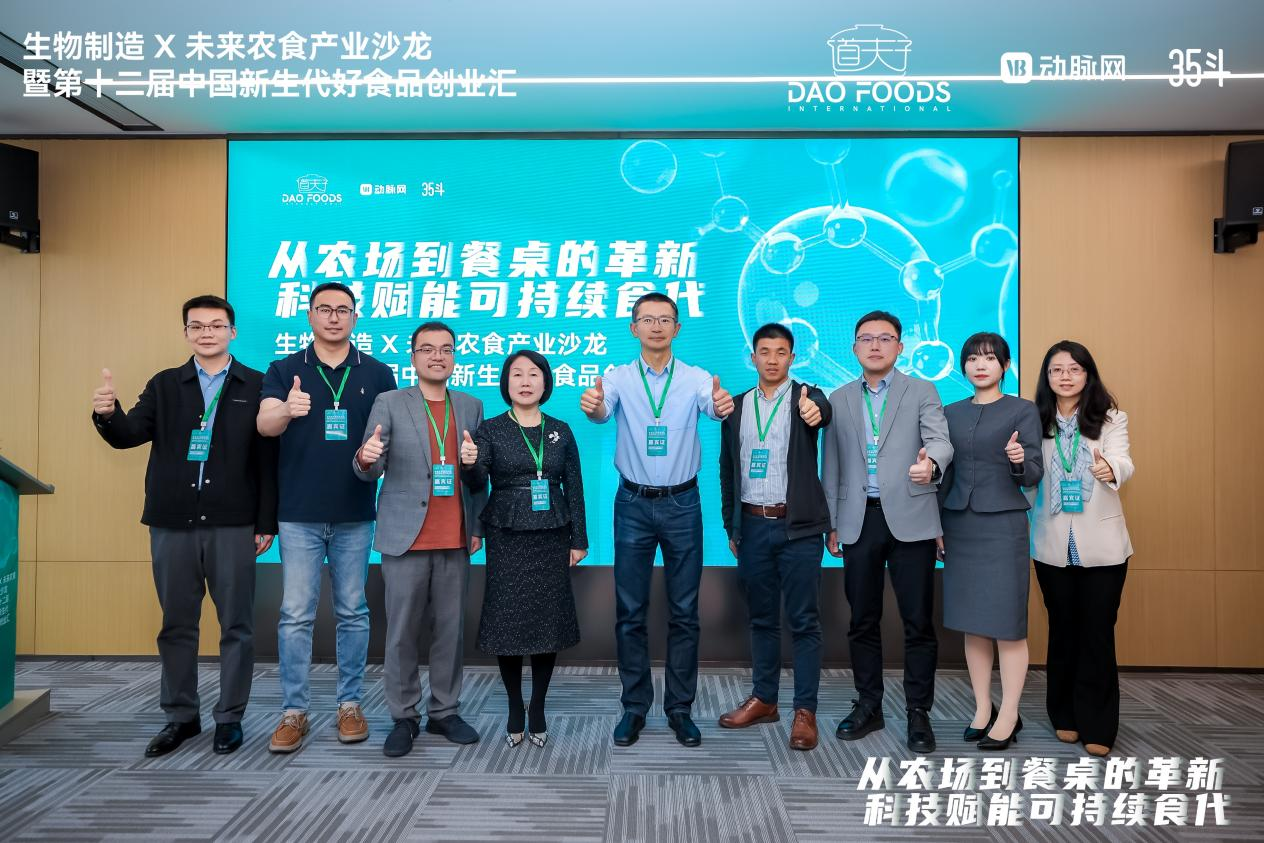
Co-hosted by Dao Foods, VC Beat, and VC Earth, the Biomanufacturing × Future Agri-Food Industry Salon and the 12th Next-Gen Good Food Bootcamp was successfully held in Wuhan. The event focused on development trends in biomanufacturing and future agri-food systems, facilitating connections between innovative projects and industry resources.
Asia-Pacific Agri-Food Innovation Summit
Singapore | Nov 04-06, 2025
Asia-Pacific Agri-Food Innovation Summit
Tao Zhang participated AgriFood Innovation Summit in Singapore, where he briefed on the latest developments in China’s innovative protein sector and government initiatives aimed at promoting protein diversification in China going forward. Additionally, Tao chaired a roundtable discussion during the Summit where participants discussed cross-border opportunities for innovative food companies looking to tap into the China market and those in China planning to go.
Dao Foods Featured on the New Ventures Podcast
New Ventures Podcast | Nov 09, 2025
Tao Zhang was invited to appear on the New Ventures Podcast, joining Professor Jaideep Prabhu of Cambridge Judge Business School and Sanjoy Sanyal, founder of Regain Paradise, for a discussion on the evolution of China’s next generation protein sector. The conversation examined flexitarian consumption trends, national food security priorities, the role of patient capital, and the growing influence of female founders in shaping China’s sustainable food future.
Listen to the full episode here:
As we move into the Year of the Fire Horse, we are reminded that the Fire Horse favors those who act with clarity and conviction.
To our founders, partners, and collaborators, thank you for building alongside us through another year. May the year ahead bring bold decisions, visible momentum, and continued growth.
