
China Food for Thought 6#: Synthetic Biology Edition
Last year, in September 2023, Dao Foods released a report entitled: The Role of Fermentation in New Protein Adoption in China. The report examined the history of biomanufacturing infrastructure development in China, new regional government policies supporting future development, and the opportunities and challenges facing large scale fermentation of new proteins.
As Dao Foods' co-founder Tao Zhang says in the report: “The fermentation approach has a lot of potential in China given its history in the country, China’s manufacturing advantage, and its relatively faster speed in terms of mass commercialization. Without a doubt, China can play an important role in both the strategy and execution of any new protein company who has the wish and will to learn and take advantage of what China can offer on this front for these reasons.”
Please download the report by clicking on the link below:
The Role of Fermentation in New Protein Adoption in China
In this issue of China Food for Thought, almost one year after the release of the report, Dao Foods provides an update on what is happening in China with regard to fermentation and synthetic biology by covering some relevant and related news including our take on what this might mean for this industry.
1. China Expands Food Supply Diversity: Government Backs Alternative Proteins Including Synthetic Biology, Algae, and Mushroom-Based Solutions
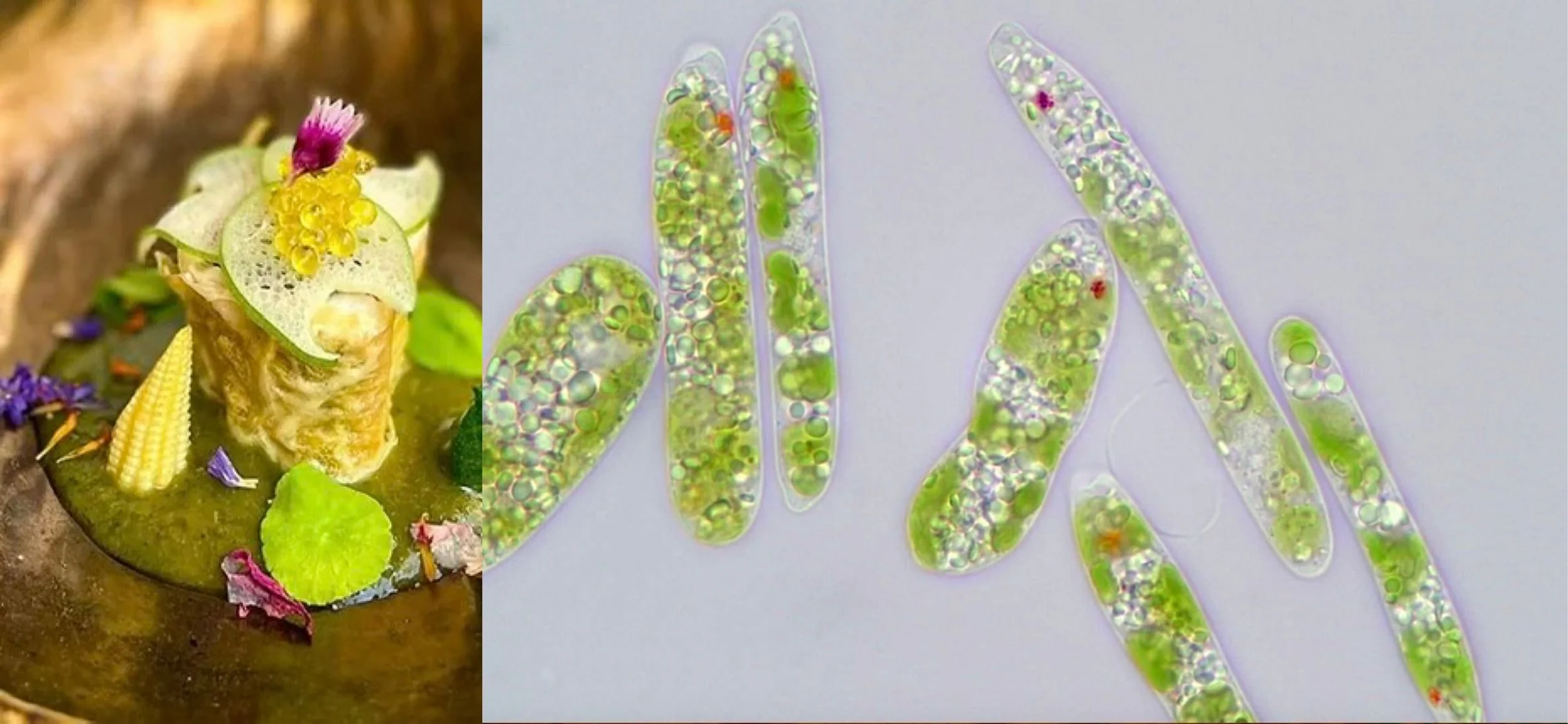
Geb Impact, a Dao Foods portfolio company, focuses on cultivating selected microalgae for biotechnological applications
In "Opinions on Practicing the 'Big Food View' Concept and Building a Diversified Food Supply System," the General Office of the State Council reiterated China's dedication to a broad-based approach to food sourcing. The plan places a strong emphasis on obtaining food from grasslands, rivers, lakes, forests, and oceans as well as from indoor agriculture. The goal is to broaden both direct and indirect food sources, explore new resources, and ensure the stable supply of diverse food types. The document outlines three core tasks.
Expanding food resources through various channels: The plan focuses on diversifying the food supply by exploring different ways to produce food. This includes developing bio-agriculture to discover new food sources, advancing synthetic biology to create innovative food products, and carefully moving these new products toward industrial-scale production. Additionally, the initiative aims to improve the food fermentation industry, speed up related research, such as using biosynthesis for natural sugar, and promote algae-based foods and edible seaweeds. It also highlights the need to find new protein sources from microorganisms, particularly microbial protein for use in animal feed. Moreover, the plan encourages the development of the edible fungi (mushroom) industry, turning mushrooms into ready-to-eat meals, health supplements, and other bioproducts.
Promoting technological innovation: The plan emphasizes the importance of accelerating technological advancements to improve the quality and efficiency of food development, making food production smarter and more effective.
Strengthening the entire food industry chain: The plan aims to build a stronger and more integrated food production system, covering all stages from farming to processing to selling. This would increase the overall value and resilience of the food supply chain, ensuring better food availability and higher economic returns.
Resource List:Opinions of the General Office of the State Council on practicing the big food concept and building a diversified food supply systemImplementing the “Big Food View” to Build a Diversified Food Supply System2. China's Major Cities Embrace Synthetic Biology for Economic Growth
Blue Canopy, a Dao Foods portfolio company, specializes in fermentation-based alternative protein ingredients through synthetic biology
Major Chinese cities like Beijing, Shanghai, and Chongqing have implemented supportive policies to promote the synthetic biology and biomanufacturing industries in the wake of the Central Economic Work Conference in December 2023, which highlighted the importance of "technological innovation to drive industrial innovation" and the expansion of strategic emerging sectors like biomanufacturing, commercial aerospace, and the low-altitude economy. Beijing, for instance, plans to establish a microbial strain repository holding over 100,000 strains by 2026, add approximately 10,000 new patented strains, and three publicly listed new synthetic biology companies, aiming to form one to two industrial clusters each worth over US $1.4 billion. The city government has also rolled out significant financial backing for relevant projects, offering up to US $140K for testing and R&D support, and up to US $7 million for shared technology platform development.
Similar regulations have been announced in Shanghai, with a special emphasis on natural product synthesis, synthetic proteins, bio-based materials, and synthetic cosmetics ingredients. The Shanghai Synthetic Biology Innovation Centre was formally established in April 2024 as part of its mission to create national engineering hubs and top-tier industrial innovation centres.
Chongqing’s policies specifically support biomanufacturing, including bio-agriculture and food industries, encouraging enterprises to adopt bioreactors to replace traditional farming for targeted biosynthesis of starch, oils, functional proteins, and alternative meats and dairy products, thus bolstering its food processing sector.
In July, the National Biomanufacturing Industry Innovation Center began construction in Shenzhen's Guangming District. As China’s first national-level biomanufacturing platform, the center collaborates with national research institutes, state-owned enterprises, and private sector leaders. It aims to shift from a linear lab-to-enterprise model to a nonlinear, interactive approach, ultimately driving high-quality growth in biomanufacturing.
In September, Dao Foods partnered with Shenzhen's Guangming District Federation of Industry and Commerce, the Guangdong Biotechnology Industrialization Promotion Association, and the Synthetic Biology Network to co-host the 2024 Synthetic Biology and Biomanufacturing Application Conference sub-forum titled "Future Foods and New Nutritional Revolution Forum."
Resource List:Interpretation: "Beijing Action Plan for Accelerating Innovation and Development of the Synthetic Biomanufacturing Industry"Beijing to Build a Microbial Strain Bank with a Capacity of 100,000 StrainsNotice from the General Office of the Shanghai Municipal People's Government on Issuing the "Action Plan for Accelerating Synthetic Biology Innovation and Building a High-End Biomanufacturing Industry Cluster in Shanghai"Shanghai Launches Synthetic Biology Innovation CenterAnnouncement from the Chongqing Municipal Development and Reform Commission on Public Consultation Regarding the "Chongqing Action Plan for Promoting the Development of the Biomanufacturing Industry"National Biomanufacturing Industry Innovation Center Launched in Shenzhen3. Regulatory Updates on New Food Ingredients in China
ProTi Food, a Dao Foods portfolio company, develops alternative proteins from protein-rich strains of microalgae and yeast
In September, the State Council's health administrative department's subordinate organization, the China National Centre for Food Safety Risk Assessment, released the "Analysis of Common Issues in 'Three New Foods' and Food-as-Medicine Ingredients." The need for regulatory approval has increased as a result of the acceleration of research into new food ingredients brought about by government-backed technological innovation.
New food ingredients, new types of food additives, and new product categories related to food are all considered "Three New Foods" and are subject to administrative licensing. Manufacturers must submit safety assessment materials to the State Council's health administrative department in order to produce food using these ingredients, and the department will review them within 60 days. Animals, plants, microorganisms, isolated components from these sources, structurally modified food ingredients, and other recently developed substances are all considered new food ingredients according to Chinese consumption customs. Following the "New Food Ingredients Safety Review Management Measures" is necessary for these products to be approved. There are two lists of approved microorganisms for use in food: the "List of Microorganisms Usable in Food" and the "List of Microorganisms Usable in Infant Food."
Please refer to the regulation's map for additional details on the regulatory approval procedure for new food ingredients.Additionally, read the article Deciphering China's Regulatory Path and Possibilities for Cell-Cultured Meat by Tao Zhang, co-founder of Dao Foods, to find out more about new food ingredients like cell-based.
Resource List:Analysis of Common Issues in 'Three New Foods' and Food-as-Medicine IngredientsCommon Questions and Explanations on "Three New Foods" and Food-as -Medicine Ingredients Released4. Moon Bio Secures US $42 Million in Latest Funding Round to Fuel ExpansionLeading biomanufacturing company Moon Bio announced in July that it had secured US $42 million in a C+ financing round. SDIC Juli, a significant state-owned investment, supplied all of the funding, carrying on the national funds' support from Moon Bio's previous Series C round.
The additional funds will be utilized to increase Moon Bio's new bioproducts' manufacturing and marketing. Additionally, it will help the company expand its unique collections of microbial strains and components and enhance its biomanufacturing technology.
The biotechnology business Moon Bio has developed a comprehensive system for finding, altering, and using microorganisms. With more than 270,000 strains covered by distinct intellectual property rights, the company asserts that it has the largest collection of microbial strains and components worldwide. Moon Bio creates superior biobased products and solutions for sectors like biopharmaceuticals, microbial proteins, and bioagriculture by utilizing its strain resources, microbiome research, data analysis, and synthetic biology platform.
Resource List:Moon Bio Completes 300 Million RMB C+ Round Financing, Continues Advancing the Commercialization of More Biotech Innovations5. Fushine Biotechnology Secures US $5 Million Government Grant
Fushine Biotechnology recently received a large government grant, expected to be around US $5 million, which strengthens its competitive position in the biofermentation industry.
Based in Jiangxi Province, Fushine specializes in creating, producing, and distributing biofermentation products. The company uses a specific strain of fungus, Fusarium solani, and combines glucose and water through advanced fermentation techniques to produce high-quality microbial proteins. Fushine's current facilities can produce up to 1,200 tons of these proteins each year. The company has ambitious plans to grow, including building a new facility capable of producing 20,000 tons of microbial protein and another facility for 50,000 tons of amino acid water-soluble fertilizer.
Fushine has partnered with leading institutions like the Future Food Science Center at Jiangnan University, Jiaxing Future Food Research Institute, and Moon Bio to drive innovation in the microbial protein industry.
Resource List:Subsidiary of Fushine Pharmaceutical, Fushine Bio, Receives 35.4 Million Yuan in Government Subsidies6. Bloomage Biotech Unveils World’s leading Pilot-Scale Production Center in Tianjin
Bloomage Biotech is a global leader in sodium hyaluronate production and has fully established its advanced pilot-scale production center in Tianjin. The facility spans 30,000 square meters, compared to the U.S. company BioMADE, which is planning to build a similar facility ranging between 30,000 and 60,000 square meters in Minnesota. Bloomage's facility is equipped to handle both pilot-scale and small-scale commercial production of various biologically active raw materials used in pharmaceuticals, skincare, and food, positioning it as the world’s leading platform of its kind.
Bloomage Biotech has been at the forefront of the development, manufacturing, and distribution of sodium hyaluronate for the past 15 years. According to Frost & Sullivan, China accounted for 82% of the world's sales of raw materials containing sodium hyaluronate in 2021, with Bloomage Biotech controlling 44% of the market.
As one of the few fully integrated companies in China, Bloomage manages everything from R&D to production and market adaptation in the synthetic biology sector. The company is also pioneering innovative food solutions like synthetic protein, aiming to revolutionize the food industry and mitigate the environmental impacts associated with traditional livestock farming.
Resource List:The World’s Largest Pilot-Scale Conversion Platform Completed: Bloomage Biotech Leads Biomanufacturing into the 5.0 EraGovernment support is vital for scaling and commercializing synthetic biology innovations worldwide. Recent developments in the field of synthetic biology in China signal a shift in government support toward a more specific direction, increasing financial input through grants and direct investment, strategically leveraging resources from the public sector and state-owned enterprises, and providing targeted policy support. The recent $42 million C+ round financing for Moon Bio, funded exclusively by SDIC Juli, and Fuxiang Biotechnology’s $5 million government grant demonstrate the Chinese government’s increased focus on advancing cutting-edge biotechnologies. These investments are set to enhance the capabilities of these leading companies and align with the national strategy to advance biomanufacturing and new proteins.
This support is part of a broader, systematic initiative outlined in the "14th Five-Year Plan for Bioeconomy Development" by the National Development and Reform Commission. The Ministry of Science and Technology’s emphasis on R&D projects in synthetic biology, biomanufacturing, and the integration of biology and information technology underscores their strategic significance. Local governments further bolster this effort through special projects, industrial parks, and supportive policies, fostering a dynamic ecosystem of start-ups and established companies.
China's in-depth experience in producing fermentation-based products at large scale provides a strong foundation to capitalize on the global push to scale up production and reduce costs for synthetic biology-based products. Chinese fermentation companies, from antibiotics to amino acid manufacturers, have the opportunity to retrofit existing infrastructure and leverage their experience to facilitate the commercialization of synthetic biology. This strategic push not only enhances China's competitive advantage, but also addresses key barriers to the synthetic biology industry, namely scaling up and reducing costs to facilitate the commercialization of synthetic biology-based products.
With China’s per capita meat consumption still at only half that as other industrialized countries, undoubtedly the demand for protein will rise with increased incomes. Synthetic biology and other alternative protein solutions represent promising pathways to meet this increased protein demand without all the global climate, environmental and health consequences of increased livestock and industrial animal agriculture production.
